Also byōsho 廟所 or otamaya 霊屋.
A mausoleum in which the spirit of the dead is enshrined. It may be related to the Sanskrit word chita, which means the wood used for the funeral pyre, but in Japan it refers to the tomb itself. Rei 霊 means spirit. The first reibyō was constructed at Toyokuni Jinja 豊国神社 in Kyoto, for Toyotomi Hideyoshi 豊臣秀吉 (1536-98) in 1599, the year after his death. It was destroyed by the Tokugawa 徳川 family, but its ruins and screen paintings suggest it was modeled after the shrine called Kitano Tenmangū 北野天満宮. This shrine was built in 947 in Kyoto, and dedicated to Sugawara Michizane 菅原道真 (845-903), a man of splendid and remarkable ability, feared by the powerful Fujiwara 藤原 clan, but forced to retire as a Viceroy to Kyūshū 九州.
From the first quarter of the 16th century, the reibyō became a common burial structure for shogun, feudal lords, noblemen, generals, heroes, or other especially revered people. They were usually erected within the precincts of a shrine or temple. Although the plan of the reibyō was never explicitly prescribed, they generally comprise a worship hall *haiden 拝殿 and main sanctuary *honden 本殿 connected by a passageway called ishi-no-ma 石の間. See *gongen-zukuri 権現造. All reibyō are lavishly decorated with brilliantly lacquered relief sculpture. Even architectural members are embellished.
Tokugawa Ieyasu 徳川家康 (1542-1616), inspired by his predecessor, Toyotomi Hideyoshi, and by the enshrinement of the deified Fujiwara no Kamatari 藤原鎌足 (614-669) at Danzan Jinja 談山神社 in Nara, aspired to deification after his death and left clear instructions regarding the handling of his remains, his place of entombment, and his funeral ceremonies. Thus, from 1616 to 1868, the building of reibyō was fashionable.
Examples: Nikkō Tōshōgū, 日光東照宮 (1636) in Tochigi Prefecture. Vastly redesigned and rebuilt by Tokugawa Iemitsu 徳川家光 (1604-51) between 1634-1636. Kōdaiji Otamaya 高台寺霊屋 (1605) in Kyoto. Rinnōji Taiyūin Reibyō 輪王寺大猷院霊廟 (1653) in Tochigi Prefecture. Kongōbuji Otamaya 金剛峯寺霊屋 in Wakayama Prefecture.
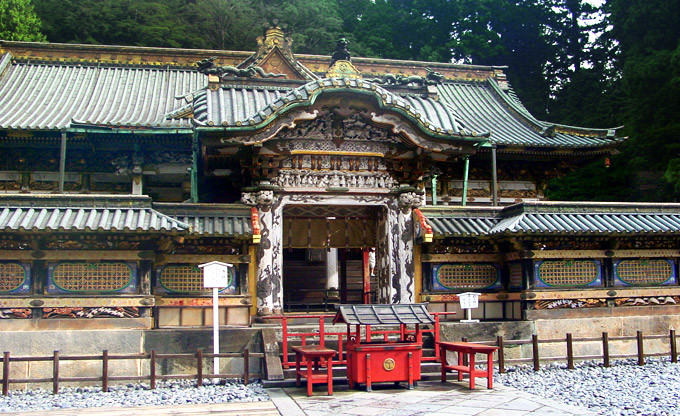
Nikkō Tōshōgū 日光東照宮 (Tochigi)
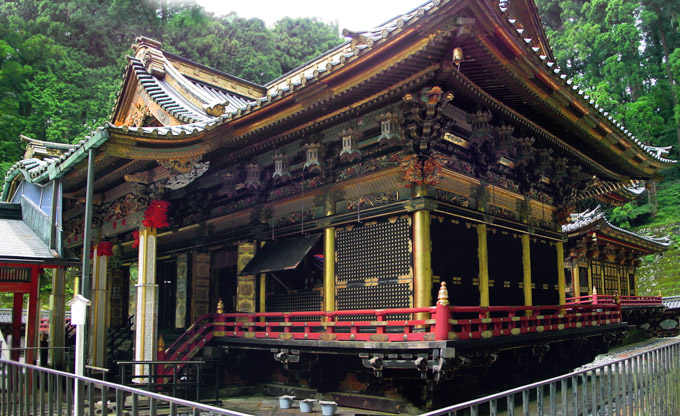
Rinnōji Taiyūin 輪王寺大猷院 (Tochigi)
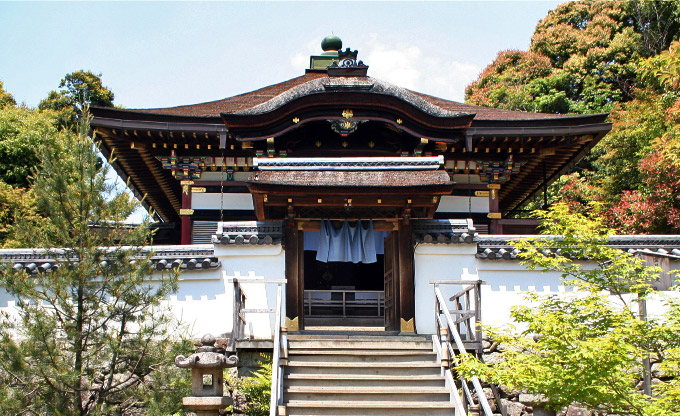
Kōdaiji Otamaya 高台寺霊屋 (Kyoto)