Keywords
Architecture
General Terms
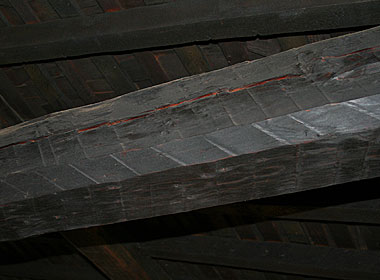
Also called chōnahatsuri 釿斫. A decorative pattern carved into the visible surface of a timber using an adze *chōna 釿 or a paring chisel *tsukinomi 突鑿. Only these tools are used and a mallet may not be used to strike the paring chisel. The three most common designs are wave patterns namigata 波形, bamboo nodes takefushigata 竹節形, and chisel marks tsukinomigata 突鑿形. These patterns are cut into *tokobashira 床柱, the posts of alcoves, *tokonoma 床の間, visible rafters *keshō daruki 化粧垂木, the wooden frame of a latticed window, and board and batten ceilings *saobuchi tenjō 棹縁天井. Because chestnut wood kuri-no-ki 栗の木 is often used to receive such patterns, the term *chōnaguri 釿栗 is also used.