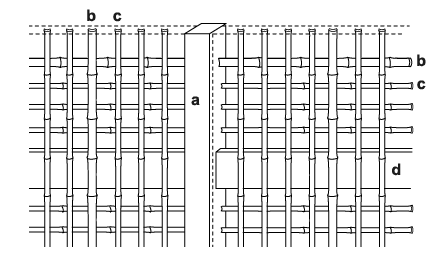
Also written 壁木舞. Thinly split lath set vertically and horizontally to form the framework *kabe shitaji 壁下地 of a base for a plastered wall. The vertical laths are positioned between the pillars or posts. Horizontal tie beams tōshinuki 通し貫 are inserted into the posts *shinkabe-zukuri 真壁造 or made to fit in an appropriate notch made on the face of the post *ōkabe-zukuri 大壁造. Either thin wood strips or bamboo are attached horizontally. In the case of shinkabe-zukuri, the lath framework is on the exterior side of the inserted beams. When the tie beams are set in notches on the face of the posts, the horizontal lath is attached to the exterior face of the post, and the vertical lath is set so that it is on the opposite side of the tie beam. With both arrangements, the rope is laced at intervals around the horizontal and vertical lath. The thickness of the wall depends on the kind of building. The number of coats of plaster therefore also varies. Rough mud plaster mixed with straw is used to form the base coat, and the final exterior coat is fine white plaster.