Gate. Also read kado. A suffix which refers to a gate, of which there are many types. Style: the structural style of gates may differ from wayō style *wayō 和様, daibutsu style *daibutsuyō 大仏様, to Zen style *zenshūyō 禅宗様, or gates which have a mixture of styles. Location: gates may also be named according to their location, generally on the north, south, east, and west sides of temple or shrine compound. Gates may also be placed on the central axis of a temple compounds, or named for the hall or main image in the hall in front of which it was erected. Use: since images are also enshrined in some gates, the gate may take the name of the deity plus the word, mon. Examples: *niōmon 二王門; and Imperial messengers' gates *chokushimon 勅使門, found mainly at temples. The many gates around the Imperial capitals have names that indicated restricted use for the emperor *miyukimon 御幸門, and for a gate for the use of princes and regents, onarimon 御成門, was built at Zuiganji 瑞巌寺 (1604), Miyagi Prefecture. Many other gates are named for their use: gates in front of mausolea *byōmon 廟門; gates used at aristocratic dwellings *omotemon 表門, gates at tea ceremony gardens *sudomon 簀戸門; gates with religious symbolism attached *sangedatsumon 三解脱門; gates for dividing one part of a compound from another *shikirimon 仕切門. Some gates are named for structural aspects such as the *kabukimon 冠木門 which uses a heavy horizontal beam *kabuki 冠木, placed between two posts. Another such gate is the *udegimon 腕木門, so named because of a brace *udegi 腕木, placed at each end above the horizontal beam, extending far enough beyond the main posts to carry the eave purlins *nokigeta 軒桁. Gates for folk dwellings and for samurai 侍 are called nagayamon 長屋門.
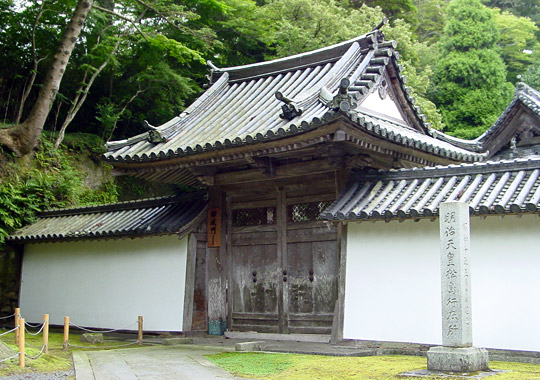
onarimon 御成門: Zuiganji 瑞巌寺 (Miyagi)
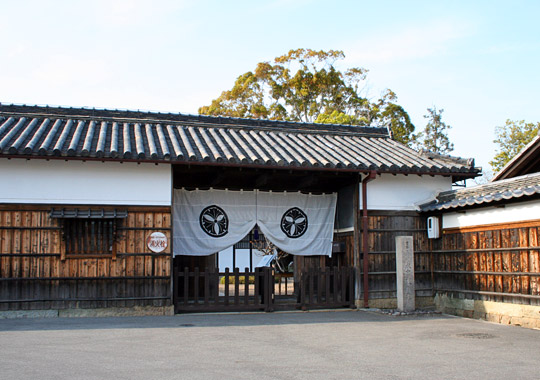
nagayamon 長屋門: Nagatomi 永富 House (Hyōgo)